- Walk Don't Talk
- Posts
- Start Small
Start Small
Starting small, staying consistent and the compound effects of that...

Oli Maitland
December 28, 2022
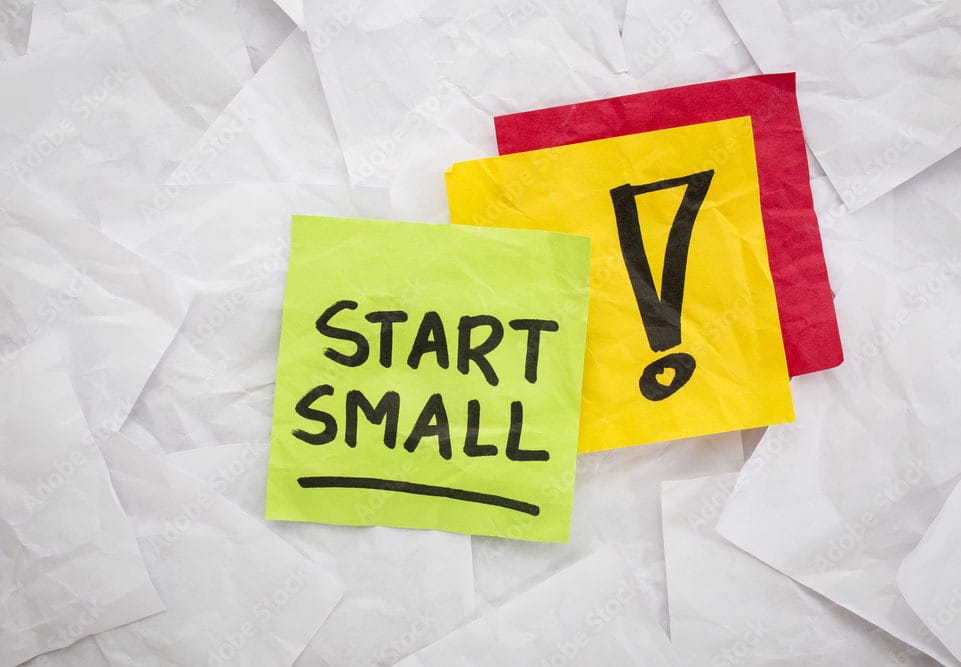
If I could throw away everything I’ve learned from all the books I’ve read this year and just keep one thing, it’d be this...
Simply just start small, no matter what it is you’re doing - Don't go into something like a trained athlete who's been doing that same routine for years as you'll fall at the first hurdle, and it won't be possible to stay consistent.
But Why?
When looking to create a new habit or goal, we always get too excited and set unrealistic starting points for ourselves. Whether that be the want to lose weight, in which you set a goal to go to the gym every other day, or want to start cooking more, in which you set yourself a target to cook dinner every night. Usually, the initial excitement of your new challenge fades after the first one, two or three attempts you then lose that excitement and motivation, and are then back at square one. And I’ll admit, this isn’t the case all the time, but more often than not we set goals that are too out of reach for the moment, and after that initial excitement of a new challenge fades we find ourselves back at square one, waiting for that motivation or that day to come which we think will suddenly change our life.
An example of this, relatable to almost all of us, is New Year's Resolutions. The New Year is when everyone sets their goals for the year and what they plan to make a habit and change about themselves which they’ll stick to for the rest of the year. A prime example of this is going to the gym. A study completed in 2018 found that 80% of new January gym-joiners quit and cancel their membership within 5 months, therefore obviously meaning that 80% of the people who signed up for the gym as their new year’s resolution to go * times per week quit within 5 months. What they’ve done to do this, is give in to the initial excitement of the challenge and lose it almost instantly rather than bringing themselves into it slowly.
How did I find out about it?
The process of starting small was explained very well in the book ‘The Compound Effect’ by Darren Hardy. He states that there was a woman named Beverly whom he’d employed, who was telling him that her friend was doing a half-marathon that weekend and said to him ‘I could never do that’. Darren (knowing about the effect of small changes) decided to help her accomplish her goal of completing a half-marathon and getting to work. Darren first told her to drive her car around the block and map out a 1-mile loop from her house. He then told Beverly to walk that loop three times over a period of two weeks which required no major stretch or pain. Once completed, he then told her to walk that loop three times in one week for an additional two weeks which she still decided to continue. Next Darren told her to start a slow jog, only as far as she felt comfortable to which she would stop as soon as she felt breathless and continue walking. He asked Beverly to do this until she could run one-fourth, then one-half, and then three-quarters of that mile. And after three more weeks (nine outings), Beverly could successfully run the full loop. Darren then asked her to increase her distance by an eighth of a mile each outing (an unnoticeable distance which was only around 300 steps further). Within six months Beverly was running nine miles with no discomfort at all, and in nine months she was running the half-marathon of 13.5 miles regularly.
This also had a ripple effect on other areas of Beverly’s life too as she lost her lifelong obsession with fatty foods such as chocolate, raised her self-esteem — making her more affectionate towards her husband, and the increased energy she gained from the cardiovascular exercise helped bring more enthusiasm to her work thus her sales performances doubled. But that’s all for another blog.
Another factor of small changes is that if you simply don’t scale them and just stay consistent with the easy changes you made in the first place, the compound effect will take over everything for you. This effect is perfectly written in the article by Runners First
Picture This
Meet Jim and John. Two ordinary guys, who live ordinary lives. Both are in good physical shape, work in relatively well-paid office jobs, and have loving relationships with their wives.
Jim starts making small, seemingly insignificant changes to his daily routine. He starts running 10 minutes a day and walks 4,000 steps to work whilst listening to an Italian language learning podcast. He reads 20 minutes of a non-fiction book before bed, spends 15 minutes at dinner about his wife’s day, and eats an extra piece of fruit and a serving of vegetables per day. These changes weren’t massive and were easily added to Jim’s daily routine.
Like Jim, John starts making small and seemingly insignificant changes to his daily routine. He starts drinking three more beers a week, eats an extra fast food meal per week, begins taking the car to work instead of walking the 4,000 steps, starts using social media for 20 minutes a day, and stops making effort with his wife.
After three months, there is no major change neither in John or in Jim’s life. It’s the same story at six months. At nine months, however, there are now large measurable results. At twelve months, both are living completely different lives.
John is heavily overweight, has a drinking problem, his relationship with his wife has broken down, he has been given a warning at work for lagging behind his colleagues and he is now addicted to social media. John isn’t happy with his life.
Jim on the other hand is physically fit and can run for a couple of hours without stopping. He and his wife have never been closer, he has been promoted at work due to learning many skills from reading books and listening to podcasts, and he is able to speak and understand decent Italian.
Both started out in the same conditions, but both ended up with completely different lives. What happened? At first, it didn’t seem like either Jim or John were venturing down different paths. It took nine months for the results of their daily habits to show themselves.
All of a sudden, after nine to twelve months of consistent daily action, their lives started to change drastically. This is the major effect consistent small tasks and The Compound Effect has.’
Conclusion
If you ever want to start and stick to a new habit, find a way to start small and slowly scale it up (or don’t scale it up at all) until you’re at the level that you want to be at.
Don’t get ahead of yourself.
Read more on exponential growth and the compound effect on my Twitter: twitter.com/oliversmaitland/exponentialgrowth
If you want to read more about the effects small changes can have, check out these books!
Atomic Habits by James Clear — amazon.co.uk/atomic-habits
The Compound Effect by Darren Hardy — amazon.co.uk/thecompoundeffect
(The above links are affiliate links, which all support me at no extra cost)