- Walk Don't Talk
- Posts
- Sleep Is Making Your Life 10x Harder; Here's How To Optimise It
Sleep Is Making Your Life 10x Harder; Here's How To Optimise It
The Best Productivity Hack

Oli Maitland
April 03, 2024
Disregard your sleep, and you are quite literally shooting yourself in the foot.
Anything you try to do becomes 10 times harder, and for what? A bit longer scrolling through Instagram?
If you want to accomplish anything of significance, the foundations of sleep come before anything else.
Yes, you can sleep for 3 hours one night and force yourself to work the day after, however, not only is that not sustainable, but when you’re working, you’ll take far longer to complete something, which also diminishes the quality of your work in the process.
I read what is arguably the best book on the planet explaining sleep and the science behind it, and these are some of the key takeaways I got from it that made me think, and I believe it will also hit those with similar goals as myself just as hard.
The book is called ‘Why We Sleep’ by Matthew Walker.
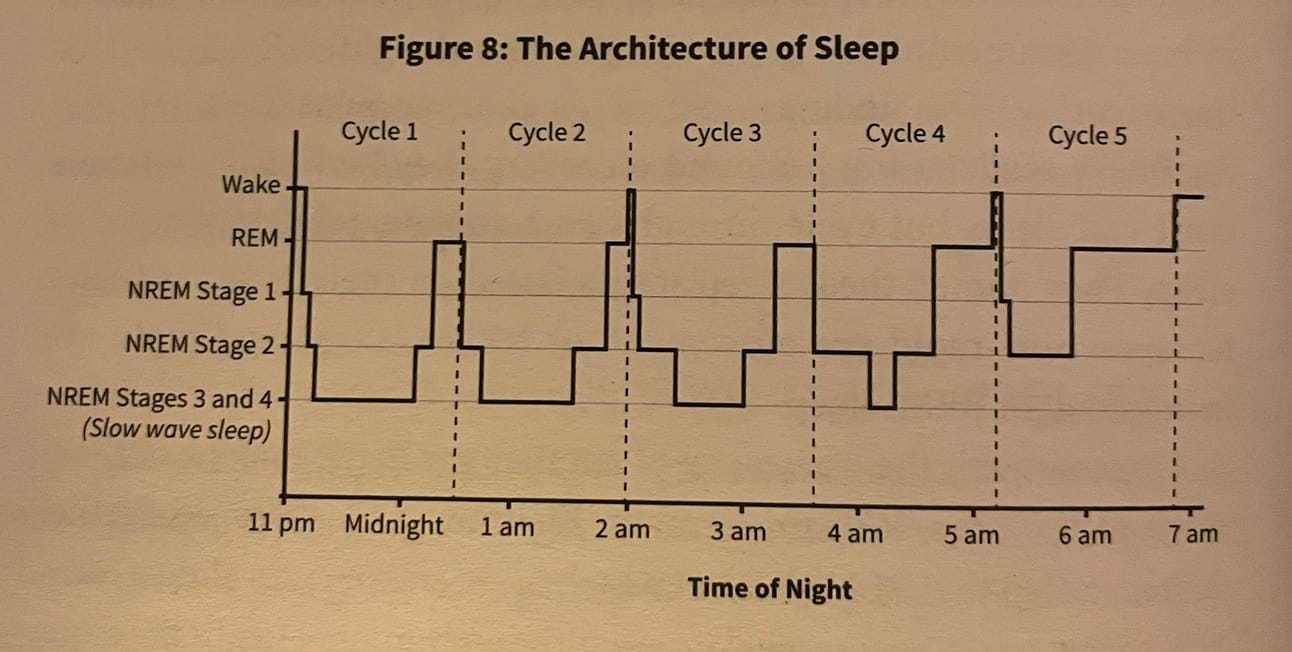
When we sleep, we go into two different stages that fluctuate from one to another throughout the night. These are called both NREM (Non-Rapid Eye Movement) and REM (Rapid Eye Movement) sleep.
During NREM (Non-Rapid Eye Movement) sleep, your body enters deeper stages of sleep, repairing and regrowing tissue, building both bone and muscle, and strengthening your immune system, and that's only the tip of the iceberg.
Whereas in REM (Rapid Eye Movement) sleep, you enter paralysis, in which your body/muscles don't move and the only thing moving is your eyes, continuously moving left and right. This is why some people get sleep paralysis when they wake up, as their body hasn't fully left REM sleep yet, therefore making their muscles inactive, and the only thing the person is then able to do is move their eyes. This stage of sleep is also known as the dream state, which is obviously the period of sleep that you dream in.
You fluctuate between these two states of sleep around every 90 minutes or so during the night, which is why if you want to set an alarm in the morning, it should be a multiple of 90 from when you go to sleep, as this is when you'll feel the least groggy when waking up. For example, if you go to sleep at 11 pm, you should set your alarm for either 6:30 or 8 am, which allows you the optimal amount of sleep.
To gain the optimal amount of sleep possible, you want to get a consistent 8 hours of sleep a night. It's acceptable to get 7-9 hours, but even 7 hours has multiple downsides.
However, the cons of only 6 hours of sleep or less over time are astronomical.
To name a few of the downsides: high blood pressure, diabetes, heart attacks, heart failure, or stroke. Also, obesity, depression, impairment in immunity, and lower sex drive. Chronic sleep deprivation can also affect your appearance.
You may think that this will compound over time and you won't feel the immediate effects, but sleeping just 6 hours a night for 3–4 days can have the same effect on you mentally as if you were drunk.
These conditions can catch up with you quickly too, so as much as you may think sleeping less may make you more productive, it does the complete opposite, making you 60% less productive during the day and shortening your life span, which obviously limits your overall time spent being productive.
LEDs and electronic devices can also have a major effect on sleep. They set your body clock back by around 3 hours as soon as you look at them. So if it were 11 pm and you're trying to sleep, your body will therefore think it's 8 pm, giving you less melatonin, and stopping you from being able to sleep nearly as easily.
It has a similar effect to jet lag when you go to a different timezone in that respect. I stop using LEDs at the latest, an hour before I go to bed and usually read or do something that doesn't involve an electronic screen. When I do use an electronic screen in the evening, I wear blue light-blocking glasses and set up the technology I use to block the blue light, which is the light that has the most significant effect on both you and your body clock.
You can block the blue light at certain times in settings on the iPhone (in display, I believe), and it'll probably be similar on Android. And for computers, laptops, etc. I use this app called 'Flux', which you can set to block all of the blue tones on your screen from a certain time (I have it set up to turn on from 8:30 pm).
Another major factor that I took from the book 'Why We Sleep' is the effect caffeine has on you and your sleep.
First of all, as you’ve more than likely already heard, you should never drink coffee past 2 pm because it lasts in your bloodstream for around 10 hours. Therefore, if you drink it after 2 pm, say 5–6 pm, it won't be out of your system until around 3 or 4 am, which, 10 hours after you drink the coffee, holds a significant amount of sleep.
It also has a significant effect on your body's clock. This is because it blocks the melatonin (which is what makes you feel sleepy) from circulating around your body for around 3 hours before you get that major caffeine crash.
That crash is the effect of the caffeine blocking the melatonin from being used, and then having 3 hours worth of melatonin all hit you all at once when the caffeine tails off, making you feel incredibly sleepy.
Caffeine also stops you from entering deeper sleep, which in turn has a major effect on your sleep and overall health over time.
To emphasise the impact of caffeine on the mind, here's a comparison of spiders making webs on multiple different drugs compared to caffeine:

Don’t get me wrong, I still drink caffeine, and I’m not pushing you to stop drinking it in any regard. I mean, I more than likely drink around 2-3 shots of it a day, but I just make sure I never drink it past 2 pm at the absolute latest.
Now you’re probably thinking, ‘Yeah, cheers for all of the info, but what can I actually do to change the way I approach my sleep to feel as awake and alive as possible during the day?’
Well, here are 11 concise takeaways I got from the book to allow healthy, optimised sleep while also allowing you to fall asleep far easier in the process:
Stick to a Sleep Schedule - Go to bed and wake up at the same time each day. Our bodies have a hard time adjusting to changes in sleep patterns, which can have a major effect on our sleep, so try to stick to a schedule. To help with this, perhaps try setting an alarm for you to go to bed, similar to how you set one to wake up. As Matthew Walker (the author of Why We Sleep) says, 'If there is one piece of advice you take from these tips, this should be it'.
Don't exercise too late in the day - Don't work out within 2 or 3 hours before you plan on going to bed, as this can have a major effect on your sleep as a whole and also make it a lot harder to get to sleep.
Avoid Caffeine and Nicotine - I've stated the issues with caffeine (which isn't just in coffee obviously), but also nicotine, which can have a significant effect on your sleep as smokers find themselves sleeping only very lightly in the night but also make you wake up well to early in the morning due to nicotine withdrawal.
Avoid alcohol before bed - Alcohol heavily robs you of REM sleep, which keeps you in the lighter stages of sleep, but it also contributes to an impairment of breathing at night, which has multiple downsides. And somewhat similar to nicotine, you also tend to wake up early in the night when the effects of alcohol have worn off.
Avoid large meals and beverages late at night - Light snacks are okay, but a large meal can cause indigestion, which heavily interferes with sleep. And also, obviously drinking too many fluids at night can cause frequent awakenings.
Don't take naps after 3 pm - Naps can help make up for lost sleep, but late afternoon naps can make it significantly harder to fall asleep at night.
Relax before you go to bed - A relaxing activity such as reading or listening to music should be a part of your bedtime routine.
Take a hot bath/shower before bed - The drop in body temperature after getting out of the bath/shower will help you feel sleepy, and a bath can help you relax and slow down so that you're more ready to sleep.
Have a dark, cool and gadget-free bedroom if possible - Get rid of anything in your bedroom that can distract you from sleeping, such as bright lights, loud noises, an uncomfortable bed, or warm temperatures. 18 degrees Celsius is the optimal temperature to sleep at, if you can keep your bedroom at that temperature, you're good to go. Also, some individuals experience insomnia from looking at the clock. Turn your clock face out of view so that you don't find yourself worrying about the time whilst trying to fall asleep.
Have the right sunlight exposure - Daylight is key to regulating daily sleep patterns. Try to get outside in natural sunlight for at least 30 minutes per day, and even wake up with the sun or with bright lights if possible, this will wake you up significantly. Sleep experts recommend that if you have issues falling asleep, try to get an hour of sunlight exposure in the morning, just after you wake up, and turn down your lights around bedtime.
Don't lie awake in bed - If you find yourself awake after 20 or so minutes of trying to get to sleep, or feel anxious or worried, get up and do something relaxing for a bit (that doesn't include LEDs or any electronic device with a screen) until you feel sleepy. The anxiety of not being able to sleep can make it much harder to fall asleep.
It's just crazy to me how naive we all are about sleep as a society, and by no means am I perfect, I mean, I currently struggle to stick to a set schedule. Matthew believes it to have come from the Industrial Revolution, for which we were forced to work long hours to get maximum positive outcomes from the boss and, in turn, lose our circadian rhythms, and slowly deteriorate our standard of sleep, and that concept still applies to this day and age.
Oli.
If you want to watch a video on this topic of hustle culture and why we as a society are so sleep-deprived, check it out here: https://www.youtube.com/watch?v=y6jpmzJq4ts
If this topic interests you, and you’d like to buy this book, you can go and check it out on Amazon here: amazon.co.uk/why-we-sleep